The short answer
Does it earn its space?
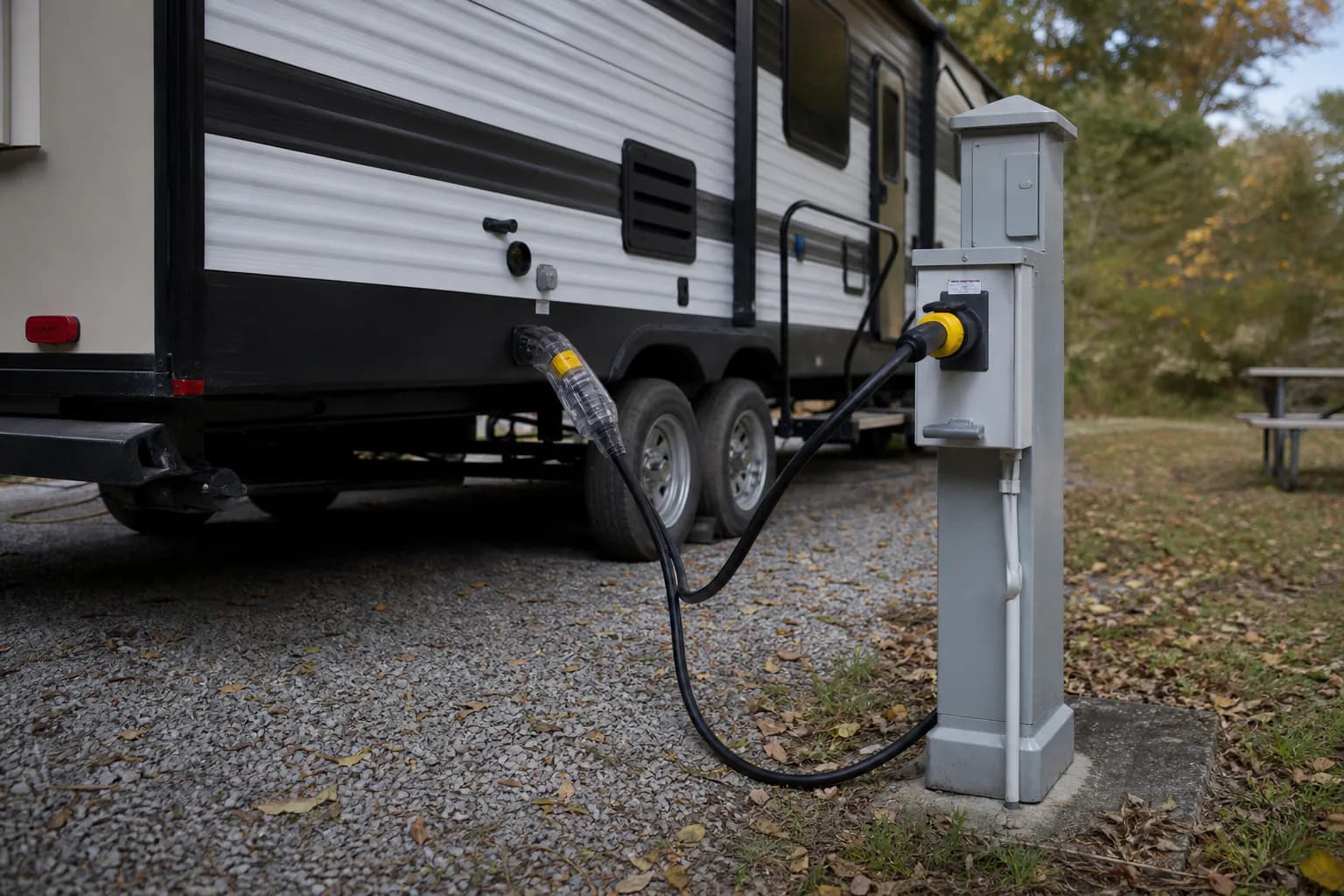
Helps protect rented RV electronics when campground shore power is inconsistent. Compare an RV surge protector only after the RV owner confirms what is already included and how the item fits the route.
A practical buyer's guide for the moments that decide whether this belongs on the trip: pickup, campsite setup, storage, cleanup, and return day.
When the owner check is clear, browse current RV surge protector options on Amazon.
- Worth packing when
- A surge protector is most useful on campground-hookup trips where you will plug into shore power for several nights.
- Ask before pickup
- Does the RV already include a surge protector, and is the rig 30 amp or 50 amp?
- Leave it home when
- The owner includes a compatible unit or if your route is mostly dry camping without shore-power hookups.
Picture the rental day
From pickup to pack-up
Follow the moments between pickup and return day that decide whether this item earns a place in the RV.
01
Pickup
Check an RV surge protector before you leave pickup
Start at the handoff, not the shopping tab. Ask: Does the RV already include a surge protector, and is the rig 30 amp or 50 amp? Then locate the owner-provided setup or the storage area where your item would go, check its condition, and note what must be returned. Buying the wrong amperage is the avoidable error here.
Match 30 amp or 50 amp before buying. If the owner already supplies a clean, compatible setup, leave the duplicate out.
02
First setup
What happens the first time you use an RV surge protector
A surge protector is most useful on campground-hookup trips where you will plug into shore power for several nights. At first use, match 30 amp or 50 amp before buying; prefer clear fault indicators so hookup problems are easier to spot. Watch for assuming an adapter replaces surge protection, because that is where a useful item starts creating more work than it removes.
The decision is whether it helps protect rented RV electronics when campground shore power is inconsistent. Match this item to the actual route, campground, pickup plan, and return rules before buying.
03
Pack-up
The return-day test for an RV surge protector
Before the return drive, the item still has to be cleaned, separated, packed, and found again at checkout. The real storage check is this: the surge protector stored with electrical gear, separate from water and sewer items, so readers can judge packed size and return handling. Check whether the owner wants renters using only their supplied gear.
Skip buying if the owner includes a compatible unit or if your route is mostly dry camping without shore-power hookups. If it adds more return-day work than it removes during the trip, it does not earn the space.
How an RV surge protector fits into a real rental day
Helps protect rented RV electronics when campground shore power is inconsistent. That does not automatically make it a must-buy; it makes it worth checking against the RV owner's included gear, your campsite plan, and the way the item will be stored after use.
A surge protector is most useful on campground-hookup trips where you will plug into shore power for several nights.
- It should solve a specific pickup, setup, campsite, park-day, cleanup, or return-day job.
- It should be easy to pack, find, use, clean, and repack inside a rental RV.
- It should not require permanent installation, owner-unapproved setup, or a full-time RV owner's storage space.
Ask the owner before comparing RV surge protector options
Start with this question: Does the RV already include a surge protector, and is the rig 30 amp or 50 amp?
If the answer depends on plug type, hose length, cabinet space, cleaning rules, pet rules, campground hookups, return expectations, or where an RV surge protector is stored, ask for a quick photo or written handoff note before you buy.
- Confirm whether the item is included, clean, working, and expected to be used by renters.
- Confirm any no-go items, especially for electrical, fresh-water, sewer, tire, surface, kitchen, or cleaning gear.
- Confirm what must be cleaned, dried, repacked, refilled, dumped, photographed, or returned in a specific place.
Fit, storage, and cleanup checks
A rental-friendly RV surge protector is usually the version that does its job and then disappears back into a small bin, cabinet, day pack, or cargo corner. Bulky gear can make a short rental feel harder than it needs to be.
Look for proof of fit and cleanup before you buy: the real setup location, the packed size, the pieces that need to stay together, and whether the item touches food, fresh water, bedding, pets, sewer gear, tires, mud, sand, or wet clothing.
- RV fit: size, connection, cabinet space, floor clearance, surface compatibility, or plug type where relevant.
- Campground fit: hookups, site layout, generator rules, shade, weather, and distance from the RV.
- Return fit: anything that leaves residue, creates sanitation issues, damages surfaces, or conflicts with owner rules should stay off the list.
When to skip an RV surge protector
Skip buying if the owner includes a compatible unit or if your route is mostly dry camping without shore-power hookups.
Also skip it when the best argument for an RV surge protector is only that it appeared on a giant RV checklist. A good rental packing list is smaller than a full-time RV owner's gear shelf.
- Buying the wrong amperage.
- Assuming an adapter replaces surge protection.
- Forgetting that some owners include one in the exterior compartment.
Final take for RV Surge Protector for Rental
Match this item to the actual route, campground, pickup plan, and return rules before buying. Use Estimate total RV trip cost to keep the gear decision tied to the real route and budget.
The useful version of an RV surge protector is not the biggest or most feature-heavy one. It is the one that makes this specific rental easier while keeping pickup, storage, cleanup, and return day simple.
Shop this guide
The gear that earns its space
Start with the item that solves the trip problem, then add only what makes pickup, camp setup, or return day easier.
Start here
RV surge protector
Helps protect rented RV electronics when campground shore power is inconsistent. Compare an RV surge protector only after the RV owner confirms what is already included and how the item fits the route.
Ask first: Does the RV already include a surge protector, and is the rig 30 amp or 50 amp?
Also useful for the trip
Water pressure regulator
Campground hookups can vary, and too much pressure can be rough on RV plumbing.
Check: Look for drinking-water-safe materials and an easy-read gauge.
See Water pressure regulator options on Amazon →Leveling blocks
A level RV makes sleeping, cooking, and refrigerator operation more comfortable.
Check: Choose blocks that are easy to stack and store in an exterior compartment.
See Leveling blocks options on Amazon →Drinking water hose
Not every rental includes a clean hose you will want to use for fresh water.
Check: Keep it separate from sewer gear and pick a length that fits campground hookups.
See Drinking water hose options on Amazon →As an Amazon Associate, ParkTrip RV earns from qualifying purchases. Confirm current product details and availability on Amazon.
Common questions
FAQs
Do I need an RV surge protector for an RV rental?
Only if it solves a real gap for your route or campsite. Ask the owner first: Does the RV already include a surge protector, and is the rig 30 amp or 50 amp?
Can I rely on Amazon prices or reviews in the guide?
No. ParkTrip RV uses category links and buying criteria only; readers should confirm live Amazon details before buying.
What if the rental already includes it?
Skip the purchase and keep the packing list smaller unless you need a personal version for hygiene, comfort, or route-specific reasons.