The short answer
Does it earn its space?
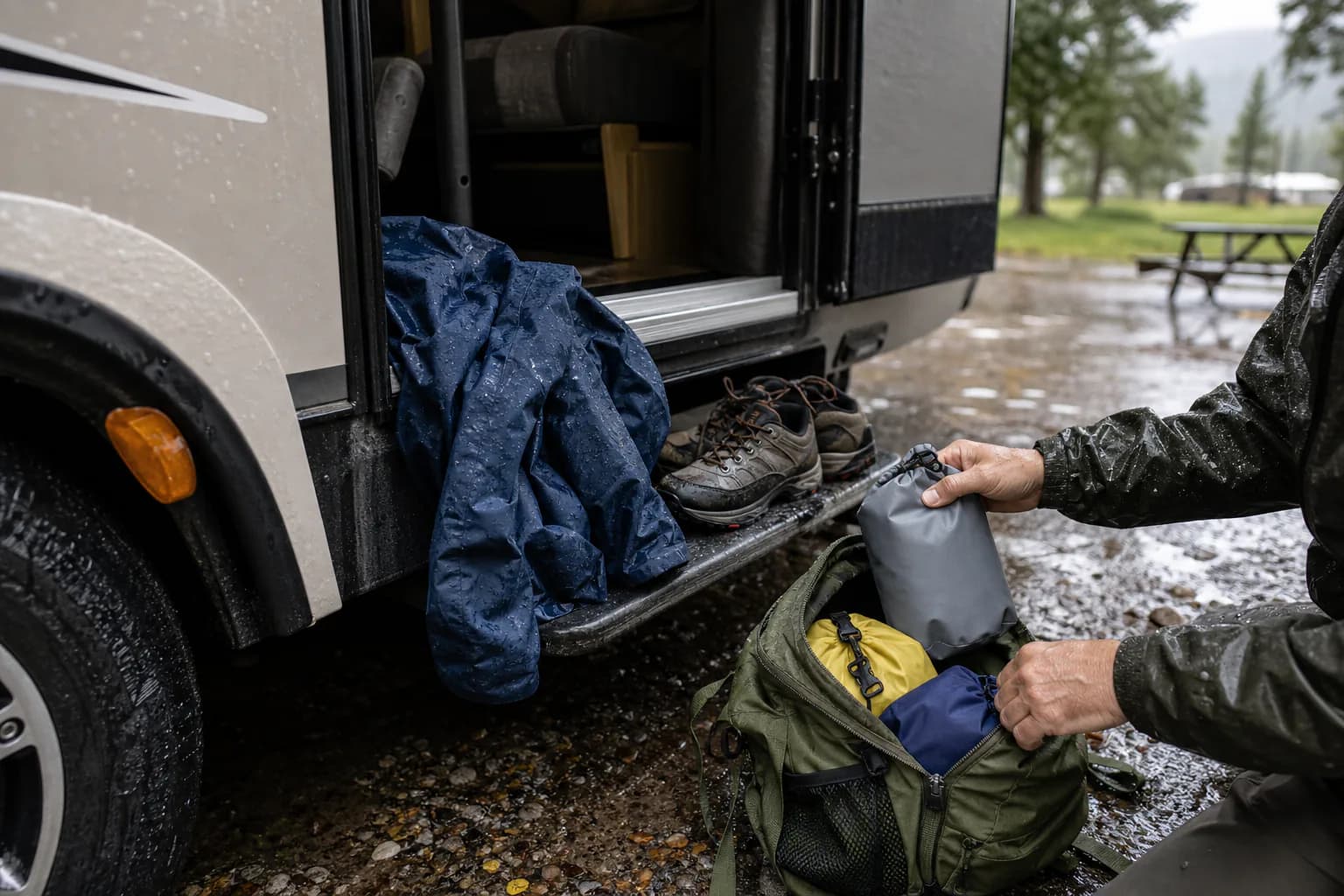
Keeps electronics, spare layers, and wet items separated on rainy or water-heavy routes. Compare dry bags only after the RV owner confirms what is already included and how the item fits the route.
A practical buyer's guide for the moments that decide whether this belongs on the trip: pickup, campsite setup, storage, cleanup, and return day.
When the owner check is clear, browse current Dry bags options on Amazon.
- Worth packing when
- Small dry bags help when wet towels, muddy layers, and cameras all need separate storage during a drive day.
- Ask before pickup
- Will this route involve rain, river days, beach stops, or limited drying space in the RV?
- Leave it home when
- Dry-weather routes with little hiking, boating, or beach time.
Picture the rental day
From pickup to pack-up
Follow the moments between pickup and return day that decide whether this item earns a place in the RV.
01
Pickup
Check dry bags before you leave pickup
Start at the handoff, not the shopping tab. Ask: Will this route involve rain, river days, beach stops, or limited drying space in the RV? Then locate the owner-provided setup or the storage area where your item would go, check its condition, and note what must be returned. Buying a giant bag that becomes a black hole is the avoidable error here. If that matches your setup, compare Dry bags options on Amazon before pickup.
Use multiple small bags instead of one oversized bag. If the owner already supplies a clean, compatible setup, leave the duplicate out.
02
First setup
What happens the first time you use dry bags
Small dry bags help when wet towels, muddy layers, and cameras all need separate storage during a drive day. At first use, use multiple small bags instead of one oversized bag; pick sizes for electronics, layers, and wet clothes. Watch for treating dry bags as guaranteed waterproof protection for valuables, because that is where a useful item starts creating more work than it removes.
The decision is whether it keeps electronics, spare layers, and wet items separated on rainy or water-heavy routes. Match this item to the actual route, campground, pickup plan, and return rules before buying.
03
Pack-up
The return-day test for dry bags
Before the return drive, the item still has to be cleaned, separated, packed, and found again at checkout. The real storage check is this: the sealed bags in a cargo bin away from dry bedding and electronics so readers can understand the cleanup and sorting payoff. Keep one bag reachable in the day pack.
Skip them for dry-weather routes with little hiking, boating, or beach time. If it adds more return-day work than it removes during the trip, it does not earn the space.
How dry bags fits into a real rental day
Keeps electronics, spare layers, and wet items separated on rainy or water-heavy routes. That does not automatically make it a must-buy; it makes it worth checking against the RV owner's included gear, your campsite plan, and the way the item will be stored after use.
Small dry bags help when wet towels, muddy layers, and cameras all need separate storage during a drive day.
- It should solve a specific pickup, setup, campsite, park-day, cleanup, or return-day job.
- It should be easy to pack, find, use, clean, and repack inside a rental RV.
- It should not require permanent installation, owner-unapproved setup, or a full-time RV owner's storage space.
Ask the owner before comparing dry bags options
Start with this question: Will this route involve rain, river days, beach stops, or limited drying space in the RV?
If the answer depends on plug type, hose length, cabinet space, cleaning rules, pet rules, campground hookups, return expectations, or where dry bags is stored, ask for a quick photo or written handoff note before you buy.
- Confirm whether the item is included, clean, working, and expected to be used by renters.
- Confirm any no-go items, especially for electrical, fresh-water, sewer, tire, surface, kitchen, or cleaning gear.
- Confirm what must be cleaned, dried, repacked, refilled, dumped, photographed, or returned in a specific place.
Fit, storage, and cleanup checks
A rental-friendly dry bags is usually the version that does its job and then disappears back into a small bin, cabinet, day pack, or cargo corner. Bulky gear can make a short rental feel harder than it needs to be.
Look for proof of fit and cleanup before you buy: the real setup location, the packed size, the pieces that need to stay together, and whether the item touches food, fresh water, bedding, pets, sewer gear, tires, mud, sand, or wet clothing.
- RV fit: size, connection, cabinet space, floor clearance, surface compatibility, or plug type where relevant.
- Campground fit: hookups, site layout, generator rules, shade, weather, and distance from the RV.
- Return fit: anything that leaves residue, creates sanitation issues, damages surfaces, or conflicts with owner rules should stay off the list.
When to skip dry bags
Skip them for dry-weather routes with little hiking, boating, or beach time.
Also skip it when the best argument for dry bags is only that it appeared on a giant RV checklist. A good rental packing list is smaller than a full-time RV owner's gear shelf.
- Buying a giant bag that becomes a black hole.
- Treating dry bags as guaranteed waterproof protection for valuables.
- Forgetting to air items out at camp.
Final take for Dry Bags RV Camping
Match this item to the actual route, campground, pickup plan, and return rules before buying. Use Olympic National Park RV rentals to keep the gear decision tied to the real route and budget.
The useful version of dry bags is not the biggest or most feature-heavy one. It is the one that makes this specific rental easier while keeping pickup, storage, cleanup, and return day simple.
Shop this guide
The gear that earns its space
Start with the item that solves the trip problem, then add only what makes pickup, camp setup, or return day easier.
Start here
Dry bags
Keeps electronics, spare layers, and wet items separated on rainy or water-heavy routes. Compare dry bags only after the RV owner confirms what is already included and how the item fits the route.
Ask first: Will this route involve rain, river days, beach stops, or limited drying space in the RV?
Also useful for the trip
Packable rain jacket
Weather can change fast around coastal, mountain, and canyon parks.
Check: A packable shell is easier to keep in the day bag than a heavy coat.
See Packable rain jacket options on Amazon →Boot tray
A small tray by the RV door helps contain mud, sand, and wet shoes.
Check: Confirm the tray is shallow enough for the entry step or floor space.
See Boot tray options on Amazon →Quick-dry towels
Useful for campground showers, river stops, and drying gear without filling the RV with damp cotton towels.
Check: Pick distinct colors so each traveler can keep track of their towel.
See Quick-dry towels options on Amazon →As an Amazon Associate, ParkTrip RV earns from qualifying purchases. Confirm current product details and availability on Amazon.
Common questions
FAQs
Do I need dry bags for an RV rental?
Only if it solves a real gap for your route or campsite. Ask the owner first: Will this route involve rain, river days, beach stops, or limited drying space in the RV?
Can I rely on Amazon prices or reviews in the guide?
No. ParkTrip RV uses category links and buying criteria only; readers should confirm live Amazon details before buying.
What if the rental already includes it?
Skip the purchase and keep the packing list smaller unless you need a personal version for hygiene, comfort, or route-specific reasons.